| Built By: | Blohm and Voss (Germany) |
| Build Group: | XVIIB |
| Fate: | Broken up by Thomas Ward Limited at, Barrow-in-Furness in September 1949. |

| 1946: | Lieutenant | William David Stewart Scott | |
| 1947: | Acting Lieutenant Commander | James Stuart Launders | DSO DSC |
In 1945, the British and American forces in Europe had captured a number of U-boats, among which were two prototypes of the Walter design that were built around an experimental engine fuelled by High test peroxide (HTP). One boat, U-1406, was handed over to the Americans, while the other, U-1407, was raised from where she had been scuttled at Cuxhaven and rebuilt by the British, being commissioned as HMS Meteorite.
The reconstruction was supervised by Professor Hellmuth Walter and his staff at Barrow-in-Furness in England. Initial trials with HMS Meteorite arose considerable interest in the possibility of HTP as an alternative to nuclear power as Air-independent propulsion, and the construction of two larger submarines was ordered, these being HMS Explorer and Excalibur.
HMS Meteorite was not popular with its crews, who regarded it as a dangerous and volatile piece of machinery, and control was difficult due to its lack of forward hydroplanes and aircraft-type controls. Meteorite's Royal Navy service came to an end in September 1949
| 13-11-1943 | Laid Down |
| 13-03-1945 | Completed |

|
||
| Official | ||
| Admiralty Approved | 18th Dec, 1947 | |
| Motto | Press on | |
| Symbology | The occupants of the Spartan commander Lysander's warship witnessed a brilliant meteor screaming across the atmosphere. It reportedly beamed its intense light directly onto the ship's rudders as they set sail to confront the Athenian fleet. The Thracians and Spartans interpreted this as a direct sign from the gods. It cemented the belief that the falling star was a divine guarantor of victory, and Lysander went on to decisively crush Athens, ending the Peloponnesian War. | |
| Design Notes | In base dexter, a gold mullet bendwise to sinister, chief a trail of silver shot with gold. Background, per fess blue and barry wavy of four white and blue. | |
| Additional Notes | The ex-German Type XVIIB U-boat did not carry a historically recognised official badge but, nevertheless, adopted the badge of the World War II M-class destroyer which previously bore the name. | |
| Displacement | 312 long tons (Surfaced) |
| 337 long tons (Submerged) | |
| Length | 136ft (Over all) |
| 89ft 7in (Pressure hull) | |
| Beam | 14 ft 9in (Over all) |
| 10 ft 10 inch (Pressure hull) | |
| Draught | 14 ft 1in |
| Propulsion | 1 x Deutz SAA SM517 supercharged 8-cylinder diesel engine, 210 shp, 150 kW |
| 1 x AEG Maschine AWT98 electric motor, 76 shp, 57 kW | |
| 1 x Walter gas turbine, 2,500 shp, 1,800 kW | |
| 1 shaft | |
| Speed | 8.8 knots (Surfaced) |
| 5 knots (Submerged) | |
| 25 knots (Submerged HTP drive) | |
| Range | 3,000 nmi at 8 knots (Surfaced) |
| 76 nmi at 2 knots (Submerged electric drive) | |
| 123 nmi at 25 knots (Submerged HTP drive) | |
| Complement | 19 |
| Armament | 2 x 21 inch bow torpedo tubes |
| 4 x torpedoes |

| Class: | 1935 - 1970: Improved S Class |
| Built By: | Chatham Dockyard (Medway) |
| Build Group: | S2 |
| Fate: | |
| Lost in the Bay of Biscay cause unknown on 11th February 1941. | |
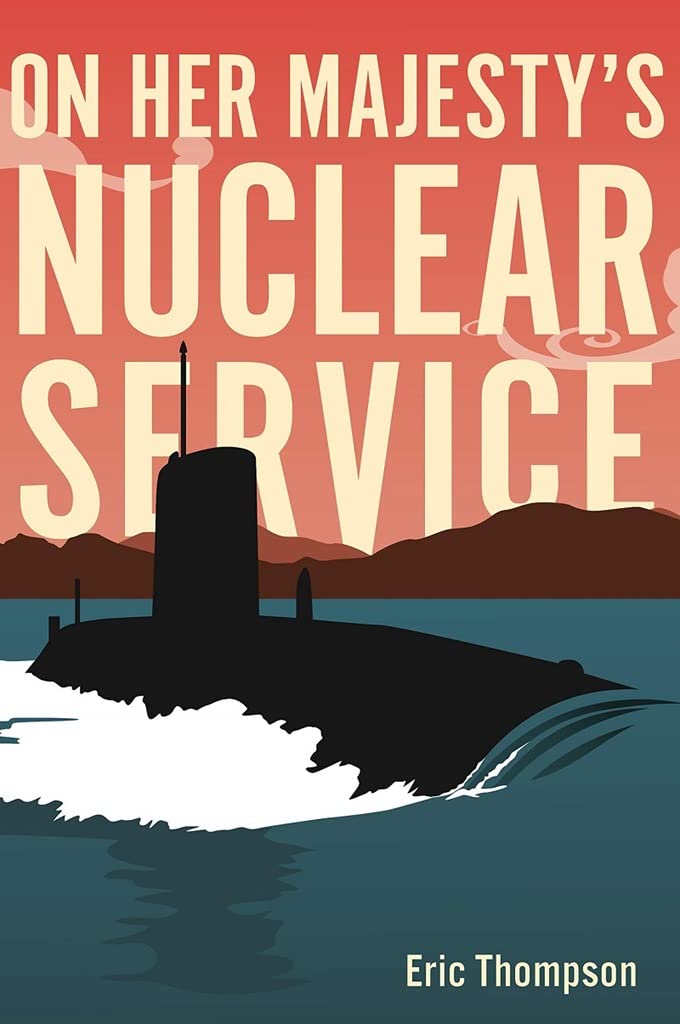
During the Cold War, nuclear submarines performed the greatest public service of all: prevention of a third world war. History shows that they succeeded; the Cold War ended peacefully, but for security reasons, only now can this story be told.
Eric Thompson is a career nuclear submarine officer who served from the first days of the Polaris missile boats until after the end of the Cold War. He joined the Navy in the last days of Empire, made his first sorties in World War II type submarines and ended up as the top engineer in charge of the navy's nuclear power plants. Along the way, he helped develop all manner of kit, from guided torpedoes to the Trident ballistic missile system. In this vivid personal account of his submarine operations, he reveals what it was like to literally have your finger on the nuclear button.
In his journey, the author leads the reader through top-secret submarine patrols, hush-hush scientific trials, underwater weapon developments, public relations battles with nuclear protesters, arm-wrestling with politicians and the changing roles of females and homosexuals in the Navy. It is essentially a human story, rich in both drama and comedy, like the Russian spy trawler that played dance music at passing submarines. There was never a dull moment.
Behind the lighter moments was a deadly serious game. This, the inside story of Britain's nuclear deterrent, reveals the secretive life of submarines and the men who served on them; they kept their watch, and by maintaining the threat of 'Mutually Assured Destruction' helped keep Britain and the world safe.
13 pages added or updated in the last 1 month
Please help to maintain this site by reporting any Errors, Broken Links, Information or Site Issues on this page using this button

If you find this site useful, please consider supporting my work with a small Donation.
Please Note: Donations made using this option go directly to the site owner and not to the Submariners Association.
Thankyou for your support.
|
|
||
| Official | ||
| Admiralty Approved | 18th Dec, 1947 | |
| Motto | Press on | |
| Symbology | The occupants of the Spartan commander Lysander's warship witnessed a brilliant meteor screaming across the atmosphere. It reportedly beamed its intense light directly onto the ship's rudders as they set sail to confront the Athenian fleet. The Thracians and Spartans interpreted this as a direct sign from the gods. It cemented the belief that the falling star was a divine guarantor of victory, and Lysander went on to decisively crush Athens, ending the Peloponnesian War. | |
| Design Notes | In base dexter, a gold mullet bendwise to sinister, chief a trail of silver shot with gold. Background, per fess blue and barry wavy of four white and blue. | |
| Additional Notes | The ex-German Type XVIIB U-boat did not carry a historically recognised official badge but, nevertheless, adopted the badge of the World War II M-class destroyer which previously bore the name. | |
| Displacement | 312 long tons (Surfaced) |
| 337 long tons (Submerged) | |
| Length | 136ft (Over all) |
| 89ft 7in (Pressure hull) | |
| Beam | 14 ft 9in (Over all) |
| 10 ft 10 inch (Pressure hull) | |
| Draught | 14 ft 1in |
| Propulsion | 1 x Deutz SAA SM517 supercharged 8-cylinder diesel engine, 210 shp, 150 kW |
| 1 x AEG Maschine AWT98 electric motor, 76 shp, 57 kW | |
| 1 x Walter gas turbine, 2,500 shp, 1,800 kW | |
| 1 shaft | |
| Speed | 8.8 knots (Surfaced) |
| 5 knots (Submerged) | |
| 25 knots (Submerged HTP drive) | |
| Range | 3,000 nmi at 8 knots (Surfaced) |
| 76 nmi at 2 knots (Submerged electric drive) | |
| 123 nmi at 25 knots (Submerged HTP drive) | |
| Complement | 19 |
| Armament | 2 x 21 inch bow torpedo tubes |
| 4 x torpedoes |
| Class: | 1935 - 1970: Improved S Class |
| Built By: | Chatham Dockyard (Medway) |
| Build Group: | S2 |
| Fate: | |
| Lost in the Bay of Biscay cause unknown on 11th February 1941. | |
During the Cold War, nuclear submarines performed the greatest public service of all: prevention of a third world war. History shows that they succeeded; the Cold War ended peacefully, but for security reasons, only now can this story be told.
Eric Thompson is a career nuclear submarine officer who served from the first days of the Polaris missile boats until after the end of the Cold War. He joined the Navy in the last days of Empire, made his first sorties in World War II type submarines and ended up as the top engineer in charge of the navy's nuclear power plants. Along the way, he helped develop all manner of kit, from guided torpedoes to the Trident ballistic missile system. In this vivid personal account of his submarine operations, he reveals what it was like to literally have your finger on the nuclear button.
In his journey, the author leads the reader through top-secret submarine patrols, hush-hush scientific trials, underwater weapon developments, public relations battles with nuclear protesters, arm-wrestling with politicians and the changing roles of females and homosexuals in the Navy. It is essentially a human story, rich in both drama and comedy, like the Russian spy trawler that played dance music at passing submarines. There was never a dull moment.
Behind the lighter moments was a deadly serious game. This, the inside story of Britain's nuclear deterrent, reveals the secretive life of submarines and the men who served on them; they kept their watch, and by maintaining the threat of 'Mutually Assured Destruction' helped keep Britain and the world safe.
13 pages added or updated in the last 1 month
Please help to maintain this site by reporting any Errors, Broken Links, Information or Site Issues on this page using this button
If you find this site useful, please consider supporting my work with a small Donation.
Please Note: Donations made using this option go directly to the site owner and not to the Submariners Association.
Thankyou for your support.
This form is for you to comment on, or add additional information to this page. Any questions will be deleted. If you wish to ask a question contact the Branch or the Webmaster using the Contact Us page or ask your question on our Facebook Page